How can composite manufacturers achieve high-volume production of lightweight sandwich structures without compromising structural integrity? Rohacryl SW structural foam cores provide the thermal stability, shear strength, and closed-cell resin efficiency required to meet demanding industrial engineering requirements.
What Is ROHACRYL® SW for High-Volume Lightweight Applications?
ROHACRYL® SW is a structural core material developed to balance mechanical performance with cost efficiency in sandwich construction. Built on an acrylic foam platform, it provides the physical properties expected of structural foam cores while satisfying the throughput requirements of modern industrial facilities.
In composite manufacturing, engineers often face a choice between heavier core materials that absorb excess resin and cost-prohibitive aerospace grades. ROHACRYL® SW functions as a practical intermediate material. It delivers stable mechanical performance across large parts while enabling composite manufacturing teams to maintain steady cycle times.
How ROHACRYL® SW functions as a lightweight structural core material
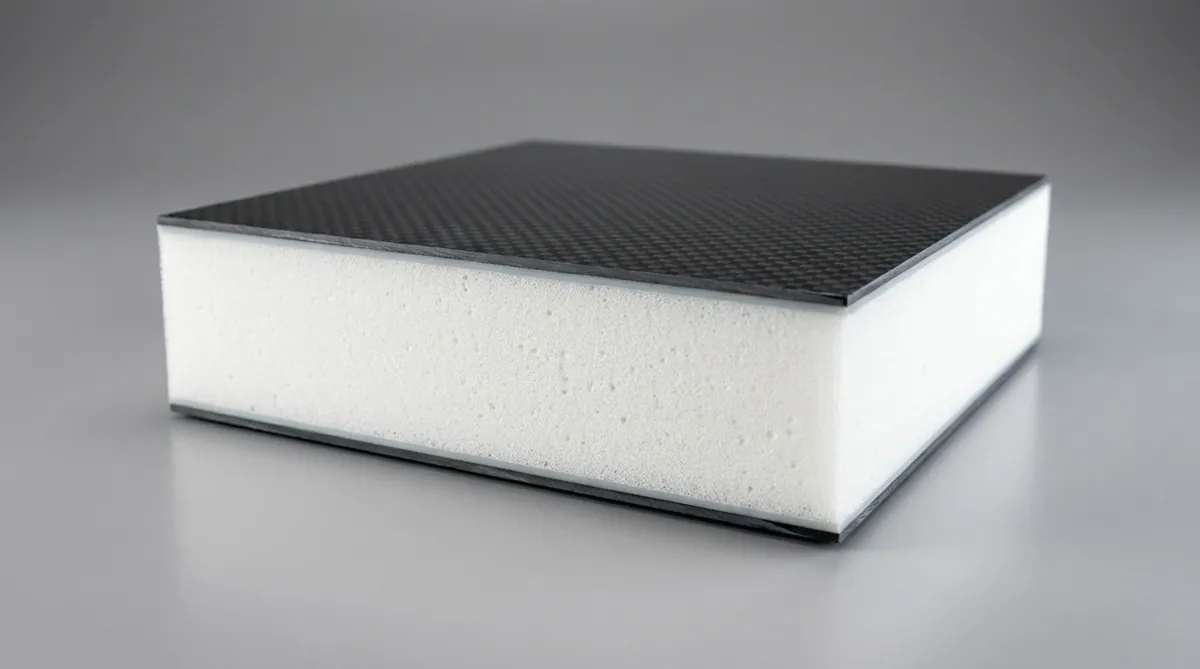
In sandwich structures, the core functions similarly to the web of an I-beam. Positioned between two high-stiffness composite face sheets, such as carbon or glass fiber fabrics in an epoxy or polyester matrix, ROHACRYL® SW separates the skins, carries transverse shear loads, and increases section modulus without adding excessive mass.
The fine, closed-cell geometry transfers mechanical stresses evenly throughout the core volume. Because the cells are fully enclosed, the foam prevents internal resin migration during composite lay-up and curing. This limits unnecessary weight gain while ensuring a strong adhesive bond to the outer skins.
What makes ROHACRYL® SW suitable for high-volume production?
High-volume composite manufacturing requires tight material tolerances and repeatable processing characteristics. ROHACRYL® SW is manufactured with uniform density and cell distribution across entire sheets. This structural consistency prevents local core crushing, dry spots, or excessive resin pooling during cure cycles.
The material also improves manufacturing efficiency. It maintains dimensional stability under vacuum pressure and elevated curing temperatures, enabling automated workflows. When paired with tight-tolerance horizontal cutting on desired material thickness and tolerance, the foam ensures consistent bond-line thickness and minimal scrap during series manufacturing.
What Performance Benefits Does ROHACRYL® SW Provide?
Specifying a structural core requires balancing mechanical properties, component mass, and environmental durability. ROHACRYL® SW delivers balanced lightweight structural performance under continuous static loads, dynamic cyclic forces, and elevated service temperatures.
These material characteristics support long component service life and help prevent typical sandwich failures. Engineers can design against face-sheet debonding, shear cracking, and core collapse under demanding operating conditions.
Reduces component weight without sacrificing structural performance
Lowering structural mass improves the energy efficiency and payload capacity of commercial transport systems and rotating equipment. ROHACRYL® SW provides high specific shear strength and compressive modulus at low core densities. This allows designers to meet specific stiffness targets using thin, optimized core cross-sections.
The closed-cell surface prevents resin ingress during liquid composite moulding processes, including resin infusion and the RTM process. Only the open surface cells at the cut boundary receive resin, keeping the finished composite close to theoretical weight calculations.
Provides thermal stability for demanding applications
Composite fabrication often generates high exothermic temperatures during matrix crosslinking. ROHACRYL® SW provides high thermal stability, allowing it to withstand high-temperature processing cycles and post-cure treatments without softening or cell collapse.
This heat resistance translates into reliable in-service durability. Structures exposed to solar heating or positioned near operational heat sources retain their geometry and shear stiffness over extended periods, avoiding surface print-through or heat-induced deflection.
Resists moisture, fatigue, and manufacturing stresses
Cyclic mechanical loading and environmental exposure are primary causes of sandwich composite degradation. ROHACRYL® SW exhibits high fatigue resistance, enduring millions of stress cycles without microcracking or cell wall rupture.
Its closed-cell acrylic matrix provides an impermeable barrier to water and industrial chemicals. If an outer skin suffers puncture damage, the core prevents moisture ingress through the cross-section. This preserves structural integrity and prevents freeze-thaw debonding in cold environments.
How Does ROHACRYL® SW Support High-Volume Manufacturing?
Widespread adoption of lightweight composite structures depends on cycle time and processing ease. Materials that require complex preparation or long cure cycles increase component costs.
ROHACRYL® SW integrates directly into standard industrial workflows. It provides the predictability required to meet short takt times and scale composite production effectively.
Supports repeatable production at industrial scale
Automated manufacturing demands consistent material dimensions and uniform thermal reaction. ROHACRYL® SW is produced to close physical tolerances, ensuring that every sandwich assembly matches CAD specifications.
This consistency eliminates the need for manual adjustments between manufacturing batches. Process engineers can run standard processing parameters with confidence that core compaction, resin wet-out, and cure behavior will remain uniform.
Integrates with existing composite processing workflows
Using ROHACRYL® SW does not require retooling your manufacturing facility. The foam core is fully compatible with standard composite processes, including vacuum-assisted resin infusion (VARI), resin transfer molding (RTM), compression molding, and prepreg autoclave processing.
The core withstands high mold pressures and curing temperatures without compressive creep. This allows manufacturers to accelerate cycle times using high-temperature resin systems. For closed-mold setups, paired tooling created via RTM molds milling ensures precise resin flow paths around the foam core.
Improves handling, cutting, shaping, and assembly efficiency
Brittle core materials frequently crack during handling, generating dust and requiring manual patching. ROHACRYL® SW provides good mechanical toughness, allowing operators to handle, position, and assemble core kits without edge damage.
The foam machines cleanly on multi-axis CNC milling equipment without tearing or fraying. Utilizing dedicated foam shape milling enables the production of precise 3D geometries, bevels, and integrated resin distribution grooves, streamlining dry-stack lay-up and speeding up infusion stages.
Which Lightweight Applications Use ROHACRYL® SW?
The balance of high specific strength and processing compatibility makes ROHACRYL® SW suitable across diverse composite sectors. It serves applications requiring high bending stiffness, low mass, and rapid production cycles.
By replacing heavy timber cores or moisture-sensitive foams, engineering teams in marine, transit, and industrial sectors can achieve weight targets while controlling production costs.
Marine structures and boat components
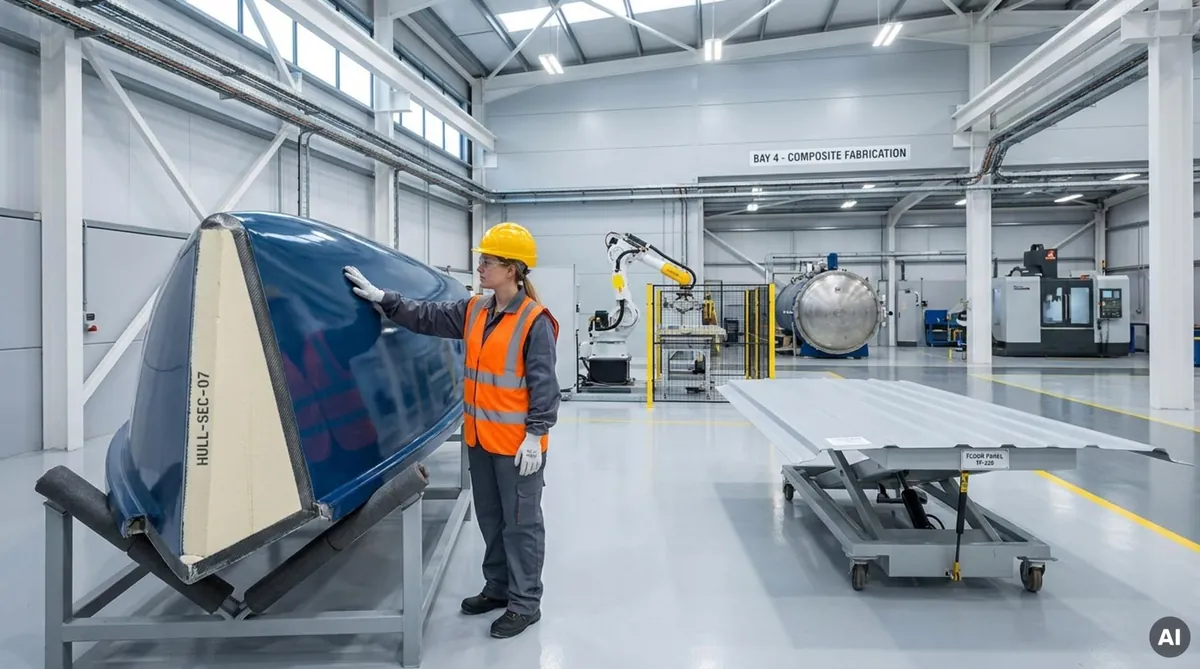
In maritime construction, displacement directly influences vessel speed, fuel economy, and payload limits. ROHACRYL® SW is used in hulls, deck panels, internal bulkheads, and superstructures.
The closed-cell composition prevents moisture absorption and core degradation, extending vessel operational life. High shear strength enables the core to withstand severe slamming loads and hydro-dynamic fatigue in rough marine environments.
Transportation and mobility components
The transition toward electric drives and strict efficiency standards requires weight reductions in commercial vehicles, buses, and railcars. ROHACRYL® SW serves as the structural core for rail vehicle floors, interior partitions, aerodynamic fairings, and roof assemblies.
In battery electric vehicles, lowering structural mass offsets battery pack weight and lowers the vehicle center of gravity. The thermal insulation properties of the foam also help regulate temperatures in passenger cabins and battery housings.
Industrial panels, housings, and enclosures
Large industrial machines, medical imaging equipment, and antenna housings require lightweight, rigid enclosures that retain dimensional accuracy under varied environmental conditions. ROHACRYL® SW provides structural support for self-supporting machine covers and protective housings.
Its low X-ray attenuation makes it useful for patient examination tables in CT and X-ray systems, maintaining structural stiffness while supporting low radiation dosages. In radomes and communication equipment, its low dielectric interference ensures clean signal transmission.
How Does ROHACRYL® SW Improve Wind Turbine Blade Design?
Wind energy equipment presents demanding structural challenges. As multi-megawatt onshore and offshore turbines grow larger, longer blades require materials with high mechanical properties that can be delivered at industrial scale.
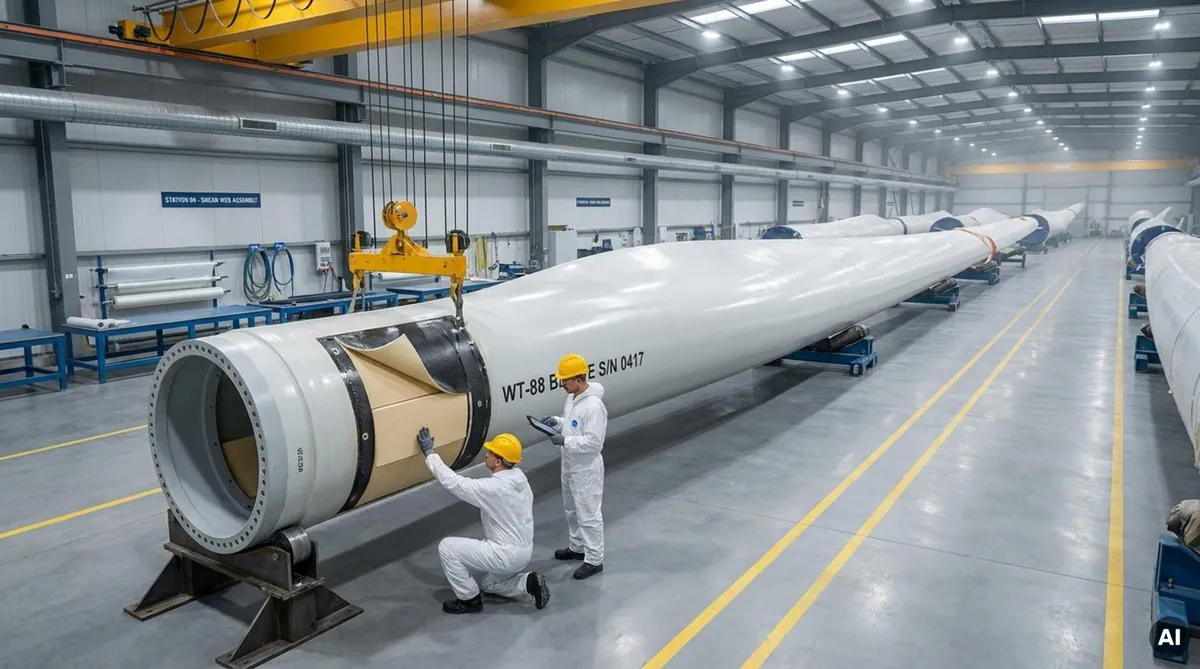
ROHACRYL® SW provides a stable structural core for blade shells and internal shear webs, meeting stringent engineering requirements for blade manufacturing.
Reduces rotor mass and turbine loads
Removing weight from turbine blades lowers gravitational, centrifugal, and dynamic fatigue loads transferred to the hub, drive train, and support tower. Using ROHACRYL® SW helps reduce total blade weight across its entire length.
Lower blade mass reduces raw material requirements for the tower and foundation. The lighter rotor also exhibits lower rotational inertia, improving cut-in performance in lower wind regimes.
Enables longer, lighter, and more efficient blades
To capture more kinetic energy, blades must increase in length without excessive aeroelastic deflection. ROHACRYL® SW features a high shear modulus and strong stiffness-to-weight ratio, allowing engineers to design aerodynamic profiles that resist buckling under gust loads.
Design teams can maintain thin, efficient airfoil sections without risking shell instability, directly contributing to higher annual energy production.
Supports blade durability and lifecycle performance
Wind turbine blades are engineered for operational lives exceeding two decades under continuous fatigue loading. ROHACRYL® SW resists shear fatigue, mitigating internal core shear failures and subsequent skin debonding.
Its high thermal stability also protects the structural assembly during exothermic resin cures, minimizing residual stresses in thick spar caps and root laminates to maintain manufacturing quality.
What Sustainability Benefits Does ROHACRYL® SW Offer?
Sustainable engineering focuses on reducing energy consumption during operation and addressing material life cycles. ROHACRYL® SW supports both aspects in sandwich composite construction.
By lowering component weight and utilizing an acrylic polymer base, this structural core helps reduce operational emissions and supports sustainable material management.
Improves energy efficiency during product operation
Lowering component weight directly reduces energy demand during operation. In rail and road transportation, reduced mass lowers propulsion energy requirements and vehicle emissions.
In wind turbine applications, lighter structural assemblies allow for longer spans that generate more clean electricity over the operational life of the turbine.
Supports recyclable structural foam solutions
Unlike thermoset core materials that are restricted to disposal or low-grade mechanical downcycling, ROHACRYL® SW is built on an acrylic polymer backbone. This thermoplastic chemistry offers potential routes for polymer recycling and monomer recovery.
At the end of component service life, the acrylic content can be processed via thermal or chemical methods to recover usable raw materials, supporting closed-loop manufacturing initiatives.
How Should Manufacturers Evaluate ROHACRYL® SW?
Qualifying a new structural core for active production requires methodical engineering validation. Technical teams must confirm that mechanical properties, resin compatibility, and processing parameters align with design requirements.
A systematic qualification plan minimizes processing issues and ensures that the final sandwich structure meets quality and performance criteria.
Match foam properties to load, temperature, and application requirements
Material evaluation begins with a detailed review of design loads. Engineers must calculate maximum shear stresses, compressive loads, bending stiffness targets, and expected service temperatures.
Reviewing technical data sheets and finite element models helps you select the proper foam grade and density, ensuring the core fulfills safety factors without adding excess mass.
Assess compatibility with resins, skins, and reinforcement systems
Sandwich construction depends entirely on core-to-skin adhesion. Engineering teams must verify the bond strength between ROHACRYL® SW and their specific resin system, including epoxy, vinyl ester, polyurethane, or unsaturated polyester.
Standard flatwise tensile tests and drum peel evaluations should be conducted to confirm full surface wet-out and mechanical interlocking. Compatibility checks should also verify that the foam resists reactive resin components, such as styrene, during processing.
Validate performance through prototypes and production trials
Small-scale coupon testing should be followed by full-scale prototype trials under plant conditions. Fabricating representative parts helps teams verify dry-stack lay-up behavior, vacuum integrity, and resin infusion timing.
Non-destructive evaluation (NDE), such as ultrasonic inspection, can confirm complete resin distribution and ensure the core has maintained its structural dimensions throughout the exothermic curing cycle.
Identify volume, supply, and quality-control requirements
Serial production requires a consistent and dependable supply chain. Purchasing and manufacturing teams must evaluate supplier inventory, delivery lead times, sheet dimensions, and custom kitting capabilities.
Establishing clear quality thresholds for density, thickness tolerances, and surface finish ensures smooth incoming material inspection and reliable production performance over high-volume runs.
How Does Evonik Support ROHACRYL® SW Applications?
Material adoption proceeds more efficiently when supported by technical specialists. Evonik provides deep materials science expertise in high-performance acrylic and PMI foam technology, assisting engineering teams from design validation through series manufacturing.
In European composite manufacturing, this technical expertise is delivered in close coordination with Chem-Craft, providing regional distribution, technical consulting, and precision milling services across Nordic Europe, Eastern Europe, and the BeNeLux countries.
Material expertise for renewable energy and composite markets
Backed by long-standing development in structural foam cores, engineering teams receive data derived from rigorous laboratory and field testing. Specialists provide insights into how specific core materials interact with matrix resins and reinforcements under complex fatigue loads.
This technical foundation accelerates the material qualification phase, helping manufacturers select suitable core materials for demanding wind energy, transit, and aerospace applications.
Technical guidance for application-specific development
Technical teams assist in optimizing ROHACRYL® SW for specific production parameters. Support covers finite element analysis inputs, resin infusion modeling, and parameter selection for CNC machining and thermoforming operations.
Through dedicated technical consulting and in-house milling capabilities, we help composite manufacturers refine processing methods, reduce lead times, and maintain structural integrity. Contact our engineers to discuss your composite application and request a material recommendation for your manufacturing process.