
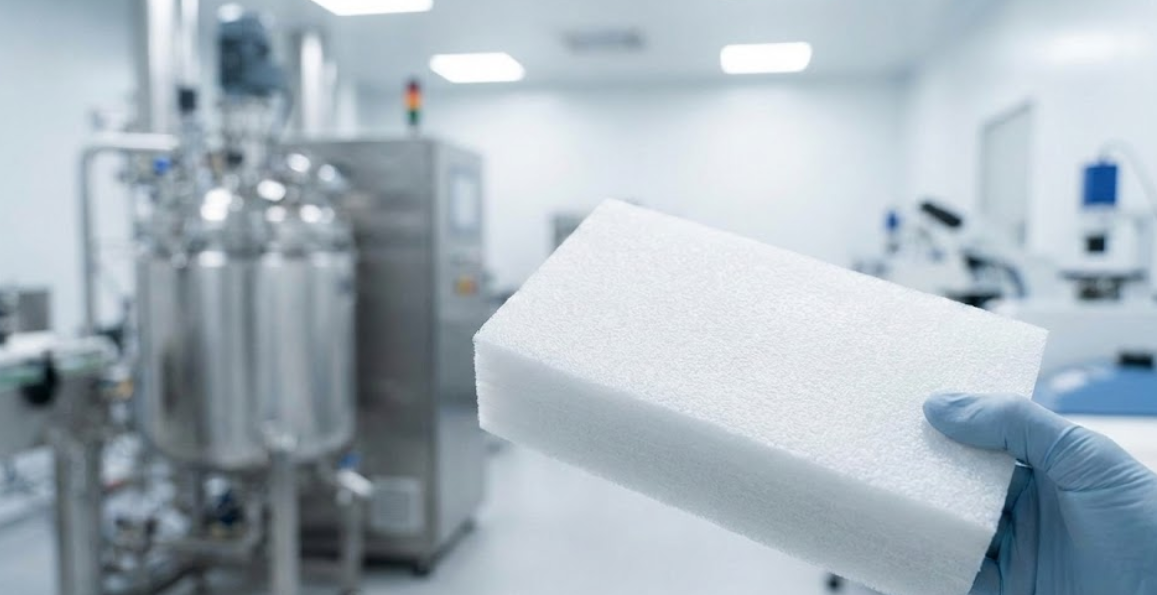
The composites industry has long grappled with a fundamental challenge: finding core materials that maintain structural integrity under elevated processing temperatures without compromising on weight efficiency or driving up costs. For decades, manufacturers accepted certain trade-offs as inevitable. You could have thermal stability, or you could have affordability and recyclability—but rarely all three in a single material. That calculus changed significantly with the introduction of ROHACRYL® foams from Evonik, a material that represents a genuine shift in what engineers can expect from structural foam cores.
What makes ROHACRYL® particularly noteworthy isn’t just one standout property. It’s the convergence of characteristics that, until recently, seemed mutually exclusive in high-volume manufacturing contexts. This acrylic-based foam chemistry delivers thermal processing capabilities up to 120°C, placing it firmly in territory that opens doors for applications previously dominated by more expensive alternatives or materials with significant drawbacks.
Understanding the Thermal Advantage
Temperature resistance in foam core materials matters for reasons that extend well beyond the obvious. When a sandwich composite undergoes curing, the core material experiences the full thermal profile of that process. Materials that soften, deform, or outgas at processing temperatures create defects, dimensional instability, and compromised mechanical performance in the finished part. Traditional options forced manufacturers into difficult choices: use lower cure temperatures and accept longer cycle times, or invest in premium materials that could withstand higher temperatures but at substantial cost penalties.
ROHACRYL® changes this equation through its superior thermal stability architecture. The 120°C processing ceiling isn’t merely adequate—it’s strategically positioned to accommodate the majority of high-volume composite manufacturing processes while remaining firmly within the material’s comfortable operating envelope. This thermal headroom translates directly into production flexibility. Manufacturers can optimize cure cycles for speed without worrying about core degradation, and they can confidently specify ROHACRYL® for applications where ambient operating temperatures might approach ranges that would compromise lesser materials.
The Cell Structure Innovation
Thermal performance alone doesn’t explain ROHACRYL®’s growing adoption. The foam’s microstructure plays an equally critical role in its value proposition. Evonik engineered ROHACRYL® SW with a very small and closed cell structure that delivers benefits across multiple performance dimensions:
- Resin uptake during infusion or RTM processes drops dramatically compared to open-cell or larger-cell alternatives, with values as low as 250 g/m² achievable in practice
- Surface quality of finished parts improves because the fine cell structure provides a more uniform substrate for laminate adhesion
- Mechanical consistency across the foam sheet increases, reducing variability in final component performance
- Thermoforming behavior becomes more predictable, enabling complex geometries without localized thinning or cell collapse
That resin uptake figure deserves particular attention. Every gram of resin absorbed into a foam core is weight that contributes nothing to structural performance—it’s parasitic mass that increases material costs and compromises the weight efficiency that motivates using sandwich construction in the first place. When ROHACRYL® achieves resin uptake levels around 250 g/m², that represents significant weight and cost savings over materials with coarser cell structures or less favorable surface characteristics.
High-Volume Production Reality
The composites industry often discusses advanced materials in terms of aerospace applications, where performance requirements justify almost any cost. ROHACRYL® certainly performs well in demanding applications, but its real significance lies in making high-performance core materials viable for industries where cost sensitivity is intense and production volumes are substantial. Automotive manufacturing, wind energy blade production, and sports equipment represent sectors where ROHACRYL®’s economics make previously impractical designs suddenly feasible.
Consider the wind energy sector, where blade manufacturers face relentless pressure to increase blade length (improving energy capture) while controlling weight (reducing structural loads and transportation costs). The recyclable structural foam formulation of ROHACRYL® addresses the industry’s growing sustainability concerns while delivering the mechanical properties these applications demand. Shear modulus values reaching 47 MPa provide the stiffness required to resist blade flutter and fatigue loading over decades of service life.
The production speed implications of ROHACRYL®’s thermal stability shouldn’t be underestimated either. In high-volume manufacturing, cycle time directly determines facility throughput and, ultimately, per-part economics. When manufacturers can confidently run hotter cure profiles without risking core degradation, they can often compress cure times substantially. The math works out favorably: shorter cycles mean more parts per shift, better asset utilization, and lower overhead allocation per component.
Processing Versatility
ROHACRYL® accommodates the processing methods that dominate modern composite manufacturing:
- Vacuum infusion processes work efficiently with ROHACRYL®’s low resin uptake characteristics
- RTM applications benefit from the foam’s dimensional stability under injection pressures
- Standard CNC machining equipment handles ROHACRYL® without specialized tooling requirements
This processing flexibility means manufacturers don’t need to restructure their operations or invest in specialized equipment to adopt ROHACRYL®. The material slots into existing workflows, which dramatically lowers the barrier to specification and qualification.
The Competitive Landscape
ROHACRYL® enters a market where engineers have traditionally chosen between PVC foams (affordable but limited in temperature and mechanical performance), PET foams (recyclable but with their own processing constraints), and PMI foams like ROHACELL® (exceptional performance but at premium price points suited to aerospace rather than automotive or industrial applications). ROHACRYL® occupies a strategic position between cost and performance extremes, offering much of the thermal and mechanical capability of premium options while remaining economically viable for high-volume applications.
The acrylic chemistry underlying ROHACRYL® also brings inherent recyclability—a characteristic that’s becoming non-negotiable for many manufacturers facing regulatory pressure and customer demands around sustainability. Unlike some thermoset-based foams, ROHACRYL® can be processed at end-of-life through established recycling pathways, aligning with circular economy principles that are reshaping material specification decisions across industries.
Looking Forward
The introduction of materials like ROHACRYL® reflects a broader maturation of the composites industry. The conversation has shifted from whether composites can deliver performance advantages to how those advantages can be delivered economically at scale. High-temperature processing capability, once the exclusive domain of aerospace-grade materials, is becoming accessible to applications where such materials would have been financially prohibitive just a few years ago.
For engineers and designers working in automotive, marine, wind energy, and industrial applications, ROHACRYL® represents a practical pathway to lightweight sandwich construction without the compromises that previously constrained material selection. The combination of 120°C thermal stability, minimal resin uptake, high mechanical properties, and recyclability addresses the full spectrum of requirements that modern composite applications demand. That’s not incremental improvement—it’s a genuine step change in what’s achievable with structural foam core materials.