What should composite engineers evaluate before purchasing PMI foam cores for demanding structural applications? Successful procurement requires verifying grade-specific mechanical datasheets, thermal processing limits, batch traceability, and quantitative resin uptake data under actual cure conditions. Assessing these engineering requirements ensures manufacturing process compatibility and prevents costly defects during autoclave processing, resin infusion, or RTM cycles.
What Is PMI Foam and Why Do Engineers Use It?
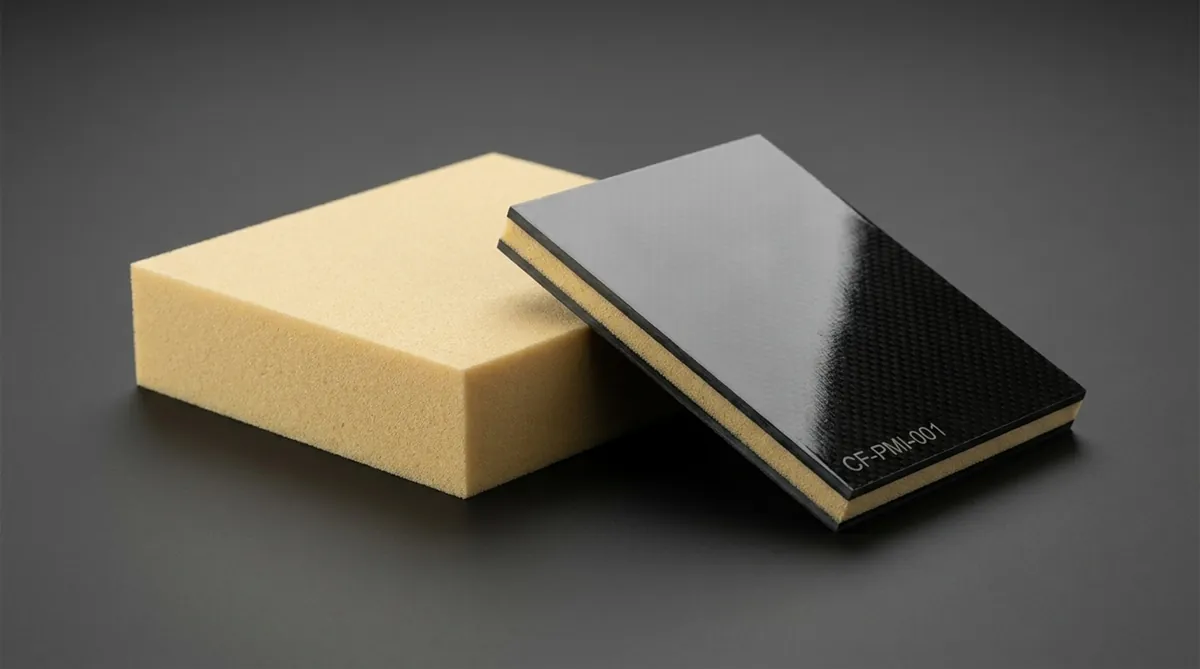
Polymethacrylimide (PMI) foam is a rigid, cross-linked thermoset structural foam engineered for high-performance sandwich structures. Unlike standard core materials, PMI features a 100% closed-cell microstructure that resists moisture absorption and maintains consistent mechanical integrity across wide temperature variations. Its molecular composition provides high dimensional stability and low compressive creep under prolonged loads, making it an established core material for flight-critical components and structural sandwich panels.
Composite engineers select PMI foam cores, such as ROHACELL® IG-F and ROHACELL® RIMA, where lightweight structural performance, high stiffness, and thermal stability are required. The uniform cell structure and controlled density distribution enable predictable behavior in aerospace structures, radomes, high-speed rail, automotive composite components, and wind turbine blades.
Key Mechanical and Thermal Properties
PMI foam technology delivers exceptional mechanical and thermal performance across a density spectrum typically ranging from 24 kg/m³ to 200 kg/m³. At low densities, it provides superior compressive and shear characteristics. For instance, a 50 kg/m³ grade delivers a compressive strength of approximately 0.85 MPa (ISO 844) and a shear modulus of 30 MPa (ASTM C273), allowing engineers to design thinner, lighter composite lay-ups capable of carrying high structural loads.
Thermal performance is a defining attribute of PMI. With heat distortion resistance exceeding 200°C (DIN 53424), certain PMI grades withstand high-temperature processing, including prepreg autoclave curing at 180°C and pressures up to 0.7 MPa, without cell collapse or dimensional deformation. In addition, PMI foams exhibit high fatigue strength, predictable impact resistance, and minimal resin absorption during composite manufacturing processes such as Resin Transfer Molding (RTM), vacuum infusion, and prepreg compression molding.
Benefits over Alternative Core Materials
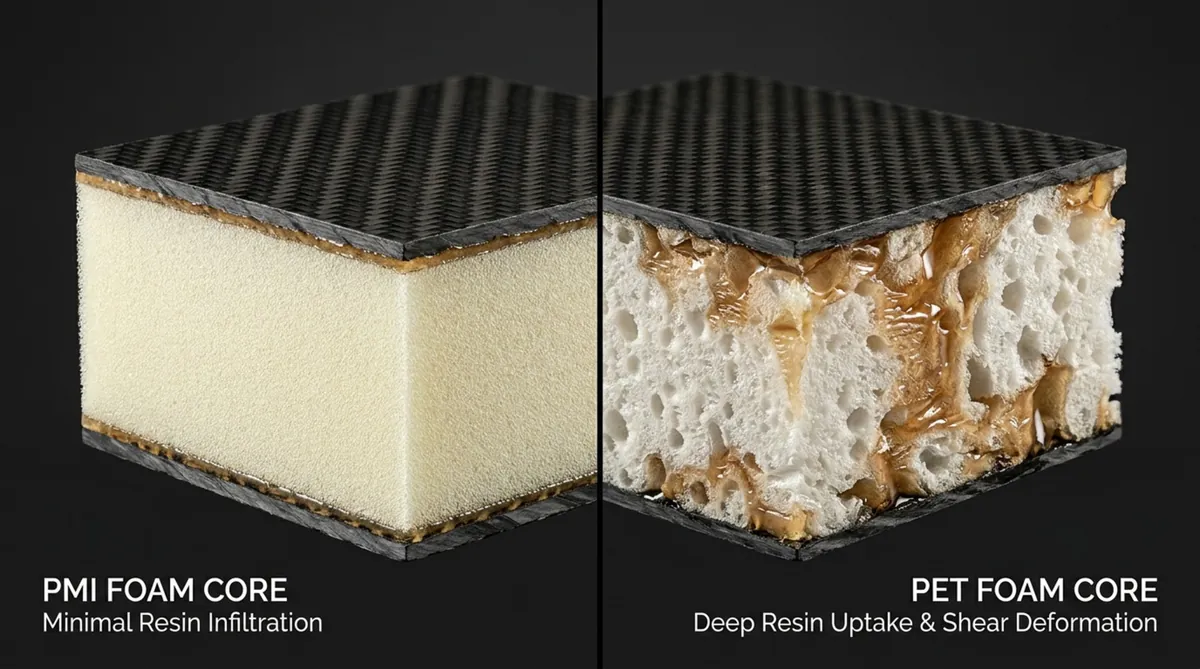
When evaluated against alternative cores such as PET, PVC, SAN, or balsa, PMI structural foam cores offer distinct engineering advantages. While PET foam has a lower initial raw material cost, its thermal limit of approximately 150°C prevents reliable single-step co-curing with standard 180°C aerospace epoxy prepregs. Thermal mismatch during cure can lead to core softening, skin-to-core debonding, and scrapped components.
PMI provides a shear modulus two to three times higher than PET at equivalent densities, transferring shear loads more efficiently across sandwich panels. Furthermore, the closed-cell structure of PMI restricts resin uptake to only the exposed cut surface cells, maintaining resin absorption below 50 g/m² under standard processing conditions. This prevents unnecessary mass accumulation and ensures precise part weight control across production runs.
How Do Application Requirements Impact PMI Foam Selection?
Selecting a PMI foam core requires aligning material specifications with the mechanical loads, curing environment, and service conditions of the final composite assembly. Material selection should be guided by empirical data and verified manufacturing compatibility.
Density, Strength, and Stiffness: Matching Engineering Needs
Core density must be matched to operational load paths, consolidation pressures, and handling requirements. A low density, such as 24 kg/m³, may be suitable for non-structural fairings or dielectric spacers. Structural sandwich panels in automotive or marine applications commonly utilize 50 to 75 kg/m³ grades. High-load inserts, edge closeouts, or localized fastening areas require high-density grades up to 200 kg/m³, which achieve compressive strengths around 9.50 MPa. PMI provides isotropic stiffness, allowing engineers to optimize core thickness without adding parasitic weight.
Thermal Stability and Maximum Processing Temperatures
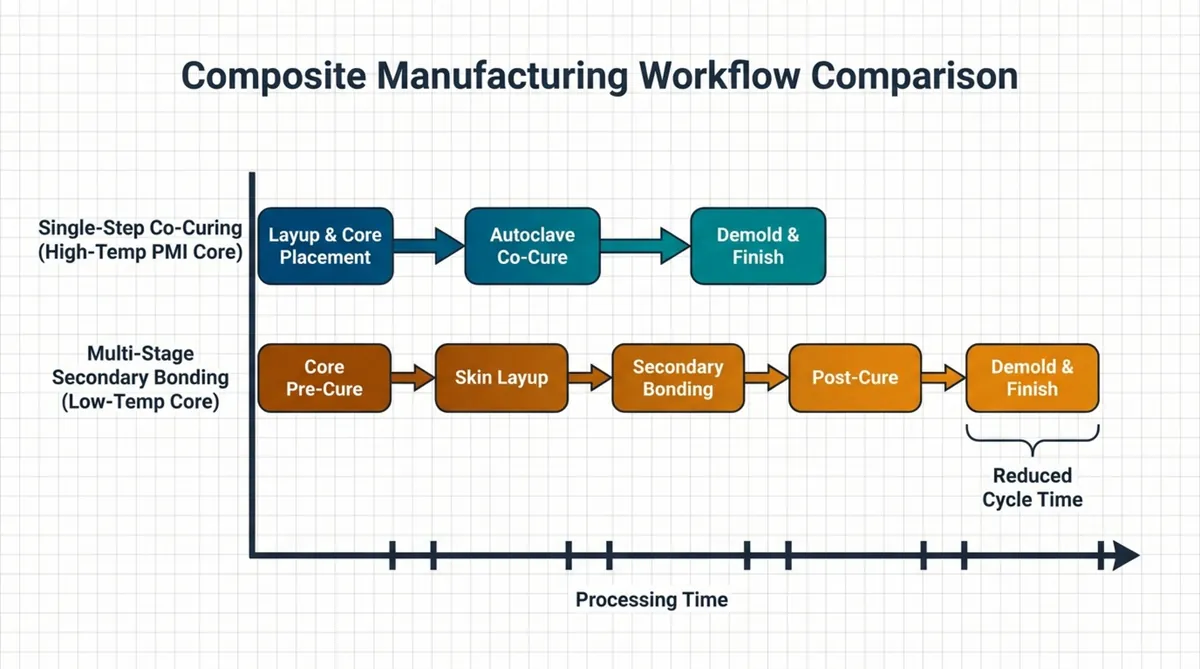
High-temperature processing requires cores that resist thermal degradation and compressive creep. Specialized grades, such as ROHACELL® XT and ROHACELL® WF, tolerate autoclave curing cycles up to 180°C and 0.7 MPa without cell collapse. This thermal stability enables single-step co-curing of composite facings and core, eliminating secondary adhesive bonding operations and reducing cycle times. Engineers should request verified process envelopes detailing maximum curing temperature, consolidation pressure, ramp rates, dwell periods, and required post-cure heat treatment protocols.
Cell Size and Resin Uptake in Composite Manufacturing
The cell structure of PMI directly governs surface resin infiltration during vacuum infusion and RTM. Ultrafine closed cells limit resin absorption to the surface layer, preventing excess weight gain and ensuring predictable dielectric properties. When sizing cores, engineers should quantify resin uptake per unit area rather than relying on nominal foam density alone. It is also necessary to evaluate how surface preparation, grooving, or CNC shape milling affects resin uptake across machined surfaces.
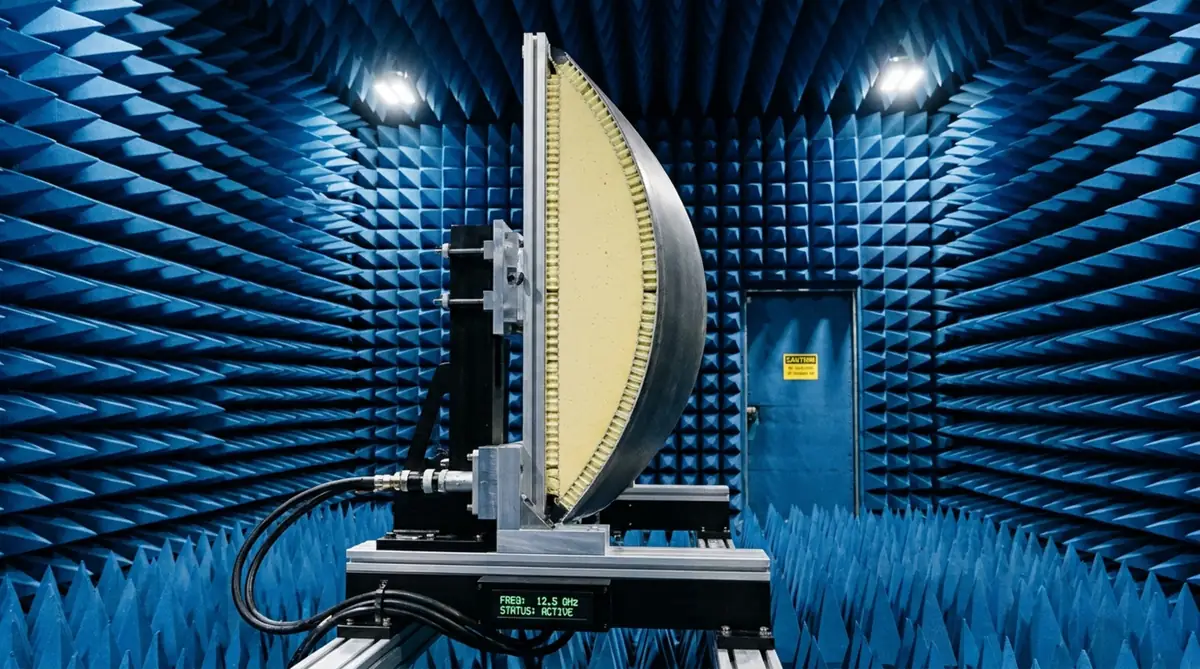
RF Transparency: Dielectric Evidence for Radar and Antenna Applications
In radomes, antennas, and telecommunications structures, the core functions as an electromagnetic element. Grades such as ROHACELL® HF offer a dielectric constant close to that of air, paired with an extremely low loss tangent across high-frequency bands (including 5G and radar frequencies). Engineers must request dielectric property data across their specific operating frequencies, accounting for resin uptake, operating temperatures, and moisture levels to prevent signal degradation.
What Questions Should Engineers Ask Before Buying PMI Foam?
Purchasing PMI foam for high-integrity composite applications requires rigorous technical due diligence. Engineers should address specific questions to prospective material suppliers to ensure processing reliability and quality consistency.
Is the Technical Data Sheet for the Specific Grade Available?
Suppliers must provide grade-specific technical datasheets rather than broad material brochures. The documentation should define nominal density, compressive strength, tensile modulus, shear strength, shear modulus, and maximum service temperatures. Each parameter must reference standardized test procedures (such as ISO 844, ISO 845, or ASTM C273) and distinguish between typical mean values and statistically validated minimums.
What Are the Critical Mechanical and Processing Test Results?
Design engineers require statistical allowables (such as A-basis or B-basis data) rather than catalog averages for flight-critical designs. Clarify whether mechanical tests were conducted on full-scale blocks, thin sheets, or machined profiles. On the manufacturing side, verify processing boundaries: maximum autoclave temperature and pressure limits, allowable out-time, drying guidelines, thermoforming parameters, and adhesive bonding compatibility.
Does the Supplier Provide Batch Traceability and Quality Certifications?
While an ISO 9001 certification demonstrates basic quality management, structural composite manufacturing requires full batch traceability. Suppliers should provide Certificates of Analysis (CoA) for each production lot, verifying that supplied raw material or CNC-machined cores conform to the mechanical and physical criteria established during initial qualification testing.
How Stable Are Dielectric Properties for RF or Antenna Use?
For high-frequency radar and communications hardware, verify dielectric constant and loss tangent stability across the entire operating frequency spectrum. Request data documenting how dielectric performance shifts with temperature fluctuations, moisture exposure, and resin uptake. Inquire about batch-to-batch dielectric uniformity to ensure consistent electromagnetic transmission across production volumes.
What Tolerances Can Be Guaranteed for Density and Thickness?
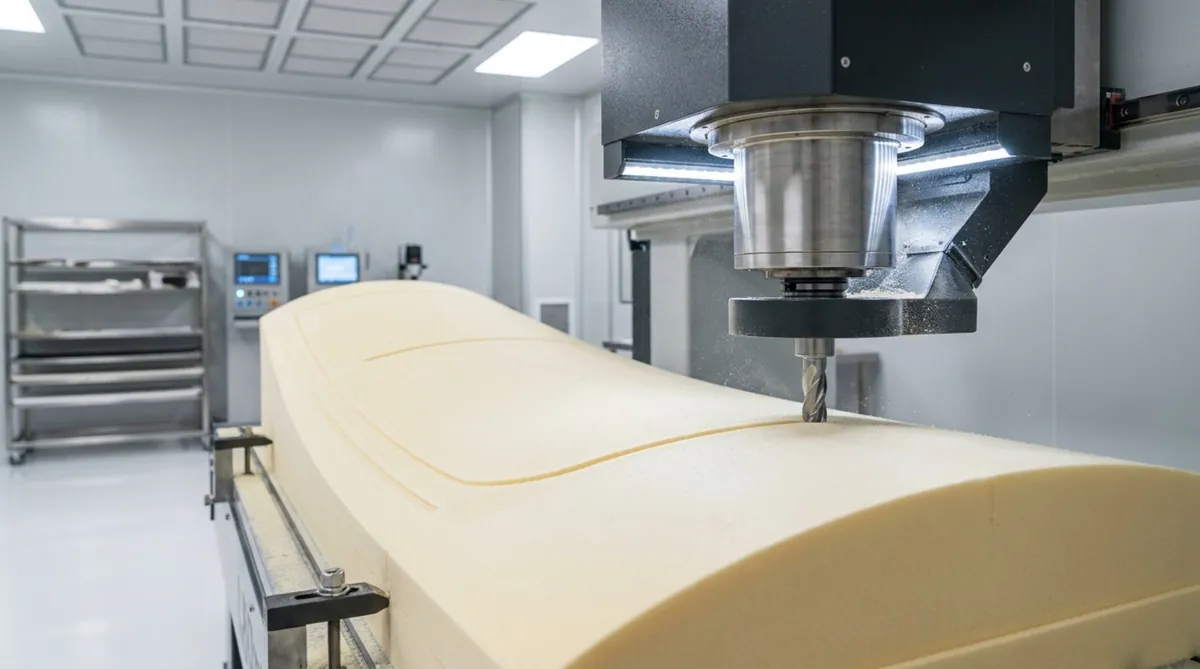
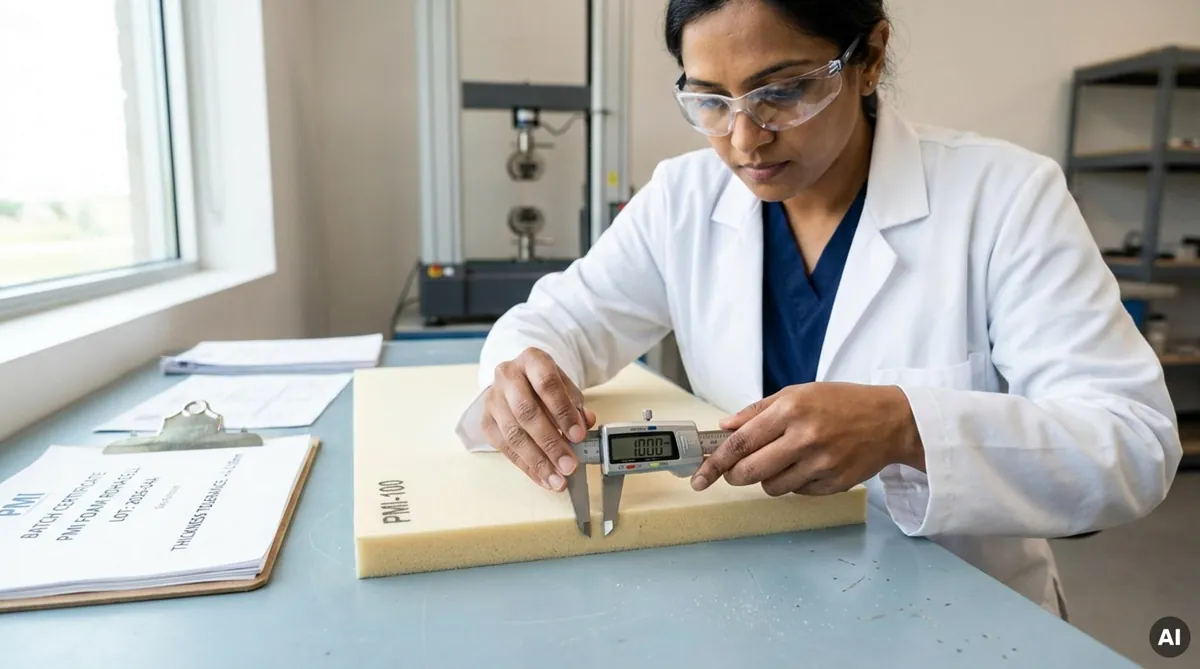
Automated manufacturing and closed molding require tight dimensional control. Inquire about available dimensional tolerances. For example, precision horizontal cutting can achieve sheet thickness tolerances down to ±0.1 mm. When ordering complex 3D cores, evaluate the supplier’s foam shape milling capabilities, surface finish criteria, and dimensional inspection protocols.
What Documentation and Supplier Evidence Should Be Requested?
A comprehensive documentation package verifies that the supplied material meets all mechanical, thermal, and manufacturing specifications before components enter production.
Material and Batch Certifications (ISO, Heat Treatment, Test Reports)
Procurement packages should include grade-specific datasheets with clearly defined test methods, processing guidelines, and quality certificates. For prepreg curing operations, request heat-treatment certification confirming that the material underwent thermal conditioning (e.g., at 150°C to 180°C) to maximize compressive creep resistance. Batch test reports must confirm compliance with standards such as ISO 844 (compression), ISO 845 (density), and DIN 53424 (temperature resistance under load).
Quality Control, Sample Validation, and Traceability Records
Suppliers should document incoming raw material controls, nonconformance handling, and dimensional inspection methods. For aerospace programs, establish that qualification test samples remain traceable to commercial production batches. Suppliers must also provide clear moisture management instructions, specifying drying procedures (typically at 135°C for a minimum of 4 hours in circulating-air ovens) and storage guidelines using diffusion-proof packaging to control out-time.
How to Compare PMI Foam Grades and Suppliers?
Evaluating PMI foam grades involves balancing material performance against total manufacturing costs, cycle times, and scrap rates.
Cost vs Lifecycle Value: Weighing Material Premium Against Performance
Although PMI foam carries a higher raw material price than PET or PVC cores, it often delivers lower total manufacturing and lifecycle costs. Its thermal stability allows single-step co-curing in autoclave or compression molding, reducing processing time by 30% to 40% compared to multi-stage bonding cycles. Closed-cell resin containment decreases expensive resin consumption, while predictable consolidation behavior minimizes scrap rates and rework in series manufacturing.
Supplier Reliability, MOQ, and Lead Time
Evaluate supplier logistics, minimum order quantities (MOQs), and delivery capabilities. Standard sheet grades should be readily available with short lead times to avoid production downtime. Assess whether the distributor provides technical consulting and downstream processing services, such as precision thickness slicing, contouring, CAD-based CNC shape milling, and in-house RTM mold milling to streamline your supply chain.
Risks: Evidence Gaps and Common Red Flags in PMI Foam Procurement
Engineers should be alert to suppliers offering generic datasheets without grade distinction, unverified dielectric data, or ambiguous cure pressure ratings. Lacking heat treatment data or moisture handling protocols introduces high risk during high-temperature autoclave consolidation. Technical due diligence should include independent coupon testing, trial cure runs, and confirmation of supplier quality systems before final production approval.
What Are the Steps in the PMI Foam Procurement Workflow?
Implementing a structured procurement workflow ensures composite materials meet all structural and processing requirements with minimal risk.
Specifying Engineering Requirements for RFQ
Begin by defining all mechanical loads, operating environments, laminate lay-up sequences, and manufacturing parameters (such as autoclave, resin infusion, or RTM). Provide CAD models and engineering drawings (STEP, IGES, or DXF) defining sheet dimensions, core thicknesses, or 3D milled geometries. This detail allows suppliers to propose the precise PMI grade, density, and pre-machining format required.
Supplier Evaluation and Sample Review
Review the supplier’s technical documentation, quality certifications, and processing recommendations. Request representative material samples or pre-machined test cores. Conduct trial lay-ups, bonding tests, and cure cycles using your intended resin system and tooling to validate skin-to-core adhesion, dimensional stability, and resin uptake under production conditions.
Approval Criteria and Documentation for Incoming Inspection
Establish incoming inspection criteria based on verified design parameters. Check incoming shipments for material identification, sheet thickness tolerances, surface cell integrity, batch numbers, and Certificate of Analysis conformance. Maintain an engineering record of approved grades, processing windows, and qualification test data to support future production scaling or design revisions.
Best Practices for Engineers Sourcing PMI Foam
- Rank Evidence by Application: Align qualification data with the target environment; prioritize dielectric data and resin uptake for radomes, impact performance for UAVs, and thermal stability for autoclave-cured parts.
- Demand Design Allowables, Not Just Averages: Base critical structural calculations on statistically verified A-basis or B-basis data rather than generic catalog averages.
- Understand the Full Process Envelope: Obtain written parameters for maximum curing temperature, autoclave pressure limits, thermal ramp rates, and required post-cure heat treatment states.
- Treat Moisture as a Key Process Variable: Adhere to recommended drying protocols (minimum 135°C in circulating-air ovens) and track cumulative out-time to prevent moisture vaporization and debonding during high-temperature cure.
- Specify Resin Uptake Quantitatively: Establish measurable limits for resin absorption per unit area for your specific infusion or injection process parameters.
- Define Machining Quality as a Geometry and Damage Spec: Define tolerances for thickness, edge geometry, and surface cell integrity on CNC-machined and thermoformed foam cores.
- Qualify Bond Durability Separately: Validate skin-to-core bonding through destructive mechanical testing (such as flatwise tension or climbing drum peel tests), ensuring failure occurs cohesively within the core rather than adhesively at the interface.
- Require Combined Environmental Exposures: Verify mechanical property retention under combined hot-wet conditioning, thermal cycling, and fluid exposure (such as aviation fuel or hydraulic fluids).
- Assess Impact and Fatigue Performance: Review fatigue S-N curves and compression-after-impact (CAI) data relevant to your composite sandwich laminate configuration.
- Verify Fire Claims for the Finished Construction: Ensure that fire, smoke, and toxicity (FST) certifications apply to the consolidated composite sandwich panel rather than the bare core material alone.
- Demand a Full Procurement Dossier: Maintain complete traceability through material datasheets, heat-treatment certificates, dimensional inspection reports, and Certificates of Conformity for each delivery batch.
Frequently Asked Questions about Buying PMI Foam
Which Documents Should Be Reviewed Before Approving a Supplier?
Engineers should review grade-specific technical datasheets, standardized test reports (ISO/ASTM), high-temperature processing guidelines, moisture drying protocols, ISO quality certificates, batch-specific Certificates of Analysis, and application-specific test validation data.
Is ISO 9001 Certification Enough for PMI Foam Sourcing?
ISO 9001 demonstrates that a supplier maintains an established quality management system, but it does not confirm whether a specific foam grade meets your component’s structural or thermal criteria. Engineering approval requires verifying material properties, processing envelopes, and trial validation under real manufacturing conditions.
Why Are Dielectric Properties Important for High-Frequency Applications?
In radomes and antenna structures, the core material functions as an active part of the RF signal path. A low dielectric constant and minimal loss tangent prevent signal attenuation, phase distortion, and beam deflection, ensuring high transmission efficiency across operating frequencies.