
In the high-stakes world of composite manufacturing, the choice of core material is only the beginning of the journey. To truly capitalize on the benefits of advanced sandwich structures, engineers and technicians must master the nuances of processing. ROHACELL® (PMI foam) and ROHACRYL® (acrylic-based foam) represent the pinnacle of core technology, offering a superior strength to weight ratio and thermal stability that traditional foams cannot match. However, these materials require specific handling and processing techniques to ensure the final component meets the rigorous standards of the aerospace, automotive, and medical industries.
As the leading supplier of these materials in Nordic Europe and the BeNeLux countries, CHEM-CRAFT has compiled years of technical expertise into this guide. Whether you are using vacuum infusion, RTM, or autoclave technologies, understanding the physical and chemical behavior of these foams is essential for achieving a perfect bond and a lightweight finish.
Precision Machining and Surface Preparation
One of the most significant advantages of using high-quality PMI foams is their workability. Unlike honeycomb structures, which can be fragile and difficult to shape, ROHACELL® can be machined into complex geometries with high precision. When working with Rohacell IG-F, manufacturers find that it is exceptionally easy to shape by machining, especially as the density of the material increases.
However, the key to a successful composite part lies in the surface. Because these foams feature an extremely fine cell structure, the surface provides a massive number of tiny anchor points for the resin. To optimize this, the machining process must be clean. Using high-speed CNC equipment with sharp tools ensures that the cells are cut cleanly rather than crushed. Crushed cells can lead to uneven resin distribution and weak bonding points.
Best Practices for Machining:
- Tool Selection: Use diamond-coated or carbide tools to ensure clean cuts without generating excessive heat that could deform the foam.
- Dust Management: PMI dust is fine and should be extracted immediately to prevent it from clogging the surface cells, which would otherwise hinder resin adhesion.
- Tolerances: Due to the material’s stability, you can achieve tolerances within microns, making it ideal for the precision components found in aerospace and medical housings.
Mastering Thermoforming and Heat Treatment
Unlike many other rigid foams, ROHACELL® provides a tremendous manufacturing advantage through its thermoformability. This allows a flat sheet of foam to be transformed into a 3D shape without losing its structural properties. The process involves heating the foam to its softening point, shaping it over a mold, and then allowing it to cool.
It is important to note that different grades have different thermal limits. For instance, Rohacell XT is designed for the most demanding conditions, capable of taking curing temperatures as high as 180°C. If your process requires a post-cure, ROHACELL® exhibits a unique compressive creep behavior that allows it to maintain its shape and thickness even under high pressure and temperature. This ensures that the final sandwich structure remains within the designed specifications.
Optimization of Resin Infusion and RTM
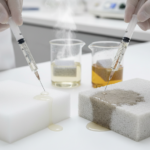
The most critical stage in composite manufacturing is the introduction of the resin. In processes like Resin Transfer Molding (RTM) or vacuum infusion, the core material is subjected to a vacuum and then “wetted” with a liquid polymer. The goal is to achieve a perfect bond between the skin and the core with as little resin as possible.
This is where Rohacell RIMA excels. It was specifically designed to ensure the minimum possible uptake of resin—approximately 50 g/m². By keeping the resin on the surface, the end weight of the component remains extremely low. Manufacturers must ensure that the vacuum pressure is consistent and that the resin flow is managed to avoid “dry spots.”
Tips for Successful Infusion:
- Degassing: Always degas your resin before infusion to prevent air bubbles from getting trapped in the fine cells of the foam.
- Pressure Control: Maintain stable pressure throughout the cycle; ROHACELL® can typically handle pressures up to 0.7 MPa depending on the grade.
- Temperature Monitoring: Ensure the foam has reached the ambient processing temperature before starting the infusion to avoid thermal shock or resin viscosity issues.
Handling High-Temperature Processes
In advanced industries like aerospace, components are often cured in autoclaves where temperatures and pressures are high. This requires a material that can withstand the heat without outgassing or collapsing. Rohacell WF is often the first choice for aeronautic applications because it satisfies strict industry specifications and maintains excellent mechanical properties even during high-temperature cycles.
When using high-performance resins like BMI (bismaleimide), the foam must be able to withstand temperatures up to 190°C. For these extreme cases, using a heat-treated grade like XT-HT is essential. The heat treatment stabilizes the polymer structure, preventing any further expansion or contraction during the final cure. This stability is why CHEM-CRAFT is the official Evonik distributor and partner, providing the technical data sheets and consulting needed to match the right foam to these extreme manufacturing conditions.
Improving Efficiency and Reducing Costs
In high-volume industries, such as automotive or wind energy, the speed of the production cycle is the primary driver of profitability. Using a core material that supports increased production speed is a strategic advantage. ROHACRYL® foams, for example, allow for high thermal processing up to 120°C. This allows manufacturers to use faster-curing resins, reducing the “dwell time” in the mold.
Furthermore, the very low resin uptake of these foams (sometimes as low as 250 g/m²) directly impacts the bottom line. Less resin means lower raw material costs and a lighter finished product, which is a key selling point for any composite part. By working with the experts at CHEM-CRAFT, manufacturers can optimize their lay-up and infusion strategies to maximize these savings.
Why Consulting with Engineers Matters:
- Material Selection: Choosing between IG-F, RIMA, or HF grades based on your specific resin system and curing cycle.
- Process Advice: Guidance on transition from hand lay-up to automated RTM or infusion processes.
- Troubleshooting: Identifying the cause of issues like delamination or core crush and providing immediate technical solutions.
Conclusion
Working with ROHACELL® and ROHACRYL® requires a blend of traditional craftsmanship and modern engineering. These materials are designed to be the “hero” of the sandwich structure, providing the stiffness and strength that make modern lightweighting possible. By focusing on clean machining, precise thermal management, and optimized resin infusion, manufacturers can produce parts that are at the absolute cutting edge of technology.
CHEM-CRAFT remains dedicated to supporting this innovation across Europe. Our team of composite engineers is ready to provide the consulting and high-precision products needed to take your manufacturing process to the next level. With the right techniques and the world’s best core materials, the possibilities for high-performance composite structures are virtually limitless.