In the high-performance world of advanced composites, carbon fiber is often hailed as the “king of materials.” Its ability to provide immense tensile strength while remaining incredibly light has revolutionized industries from Formula 1 racing to commercial aviation. However, a carbon fiber laminate alone is often not enough to meet the structural requirements of complex parts like aircraft wings, helicopter rotors, or automotive chassis. To maximize the potential of carbon fiber, engineers utilize a “sandwich construction” where a lightweight core is placed between two carbon fiber skins. Among the various core materials available, ROHACELL® PMI foam has emerged as the premier choice, offering a superior strength to weight ratio that complements the characteristics of carbon fiber perfectly.
This article explores the symbiotic relationship between carbon fiber and ROHACELL®, comparing how they work together and why this combination is superior to using carbon fiber in solid laminates or with inferior core materials. As the official Evonik distributor and partner in Northern and Eastern Europe, CHEM-CRAFT provides the technical expertise and high-precision products necessary to master these advanced material pairings.
The Physics of the Sandwich Construction
To understand why ROHACELL® is compared to and used with carbon fiber, one must understand the physics of stiffness. In a composite beam, the stiffness is not just a result of the material’s inherent strength, but its geometry. By using a core to separate two thin layers of carbon fiber, the “second moment of area” is increased significantly. This creates a structure that is much stiffer than a solid carbon fiber plate of the same weight.
However, the core material must be able to keep up with the carbon fiber. If the core is too soft, the carbon skins will buckle. If the core is too heavy, the benefit of using carbon fiber is lost. ROHACELL® is unique because it provides the necessary shear strength and stiffness to support carbon fiber skins even at very low densities. Its high thermal performance and stability ensure that it does not degrade during the high-temperature curing processes required for high-grade carbon fiber resins.
Why ROHACELL® is the Perfect Partner for Carbon Fiber:
- Thermal Compatibility: Carbon fiber prepregs often require curing at 120°C to 180°C. ROHACELL® maintains its structural integrity at these temperatures, preventing core collapse.
- Bond Strength: The extremely fine cell structure of ROHACELL® provides a superior surface for carbon fiber resins to bond to, ensuring the skins never delaminate under stress.
- Weight Optimization: Because ROHACELL® is so strong, manufacturers can use thinner cores or lower densities to achieve the same structural goals, further reducing the weight of the carbon fiber assembly.
High-Temperature Processing and Autoclave Technology
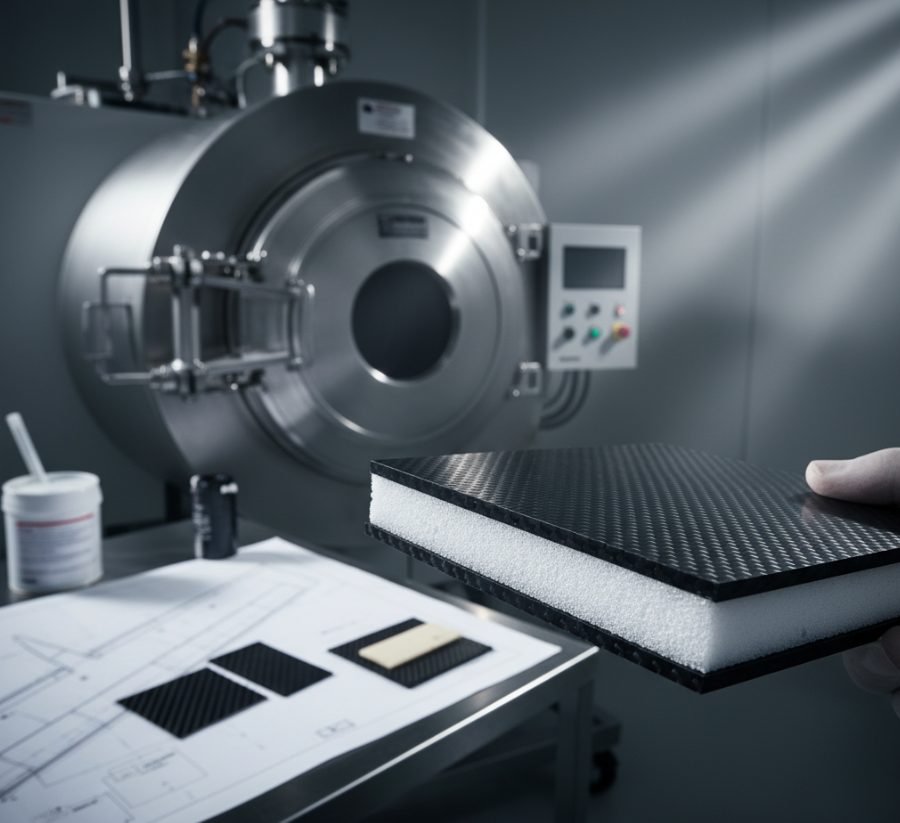
In aerospace and high-end automotive manufacturing, carbon fiber is often processed using an autoclave—a pressure vessel that uses heat and high pressure to “bake” the composite. This environment is incredibly punishing for core materials. Standard foams often “outgas” or shrink, leading to a ruined part.
Rohacell XT was developed specifically for these demanding conditions. It is suitable for autoclave technologies and vacuum infusion processes, capable of withstanding curing temperatures as high as 180°C and pressures as high as 0.45 MPa. When using advanced BMI (bismaleimide) resins—which are common in stealth aircraft and high-performance engines—the core must be even more resilient. In these cases, the unique compressive creep behavior of ROHACELL® ensures that the core does not deform during the long, hot curing cycles, maintaining the aerodynamic precision of the carbon fiber exterior.
Minimizing Resin Uptake: The Weight Battle
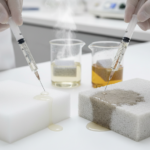
One of the biggest challenges when combining carbon fiber with a foam core is “resin gain.” Carbon fiber is expensive, but the resin used to bind it can also be heavy. If the foam core has large or open cells, the resin will seep into the core during the infusion or autoclave process. This adds weight to the part without adding any strength, effectively undoing the benefits of using carbon fiber.
ROHACELL® RIMA is the industry’s answer to this problem. It features an extremely fine cell structure that ensures the minimum possible uptake of resin. By keeping the resin on the interface between the skin and the core, the very low resin uptake (approximately 50 g/m²) allows the final component to remain at its theoretical minimum weight. This is critical in aeronautic applications where every gram of weight saved translates into fuel efficiency or increased payload.
Common Applications in Aeronautic Engineering:
- Pressure Bulkheads: Using Rohacell WF as a core for carbon fiber stringers in aircraft fuselages.
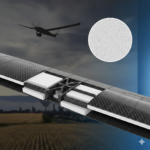
- Rotor Blades: Helicopter main and tail rotors require the extreme fatigue resistance of carbon fiber paired with a rigid, lightweight core.
- Fuselage Panels: Large-scale panels that must withstand high altitudes and extreme temperature fluctuations while maintaining excellent mechanical properties.
Comparing ROHACELL® to Carbon Fiber Honeycomb
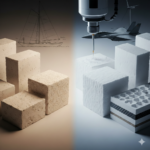
Before the widespread use of PMI foams, carbon fiber “honeycomb” was the standard core material in aerospace. While honeycomb is very light, it has several drawbacks when compared to ROHACELL®. Honeycomb is “anisotropic,” meaning its strength is only in one direction. It is also difficult to machine into complex 3D shapes.
ROHACELL® is “isotropic,” meaning it has the same strength in all directions. It is also much easier to handle. While carbon fiber honeycomb can trap moisture in its open cells—leading to corrosion or freeze-thaw damage in aircraft—ROHACELL® is a closed-cell foam that is impervious to moisture. This makes it a more durable long-term partner for carbon fiber skins, especially in exterior applications like winglets or fairings.
The Role of CHEM-CRAFT in Advanced Composite Design
Navigating the complexities of carbon fiber and core material interaction requires a deep understanding of chemistry and mechanical engineering. CHEM-CRAFT acts as a vital bridge between Evonik’s material science and the end manufacturer. As the leading supplier in Eastern and Northern Europe, CHEM-CRAFT doesn’t just deliver sheets of foam; they provide the consulting necessary to choose between a WF, XT, or RIMA grade based on the specific carbon fiber resin and curing cycle being used.
Our team of engineers is specialized in the processing methods that make carbon fiber successful: hand lay-up, RTM, infusion, and autoclave. By offering suggestions on thermoforming and machining, CHEM-CRAFT ensures that the ROHACELL® core is perfectly prepped to meet the carbon fiber skins, resulting in a flawless, high-performance sandwich structure.
Conclusion
Carbon fiber and ROHACELL® are the “dream team” of modern manufacturing. While carbon fiber provides the tension and compression strength, ROHACELL® provides the internal support and stiffness that makes large-scale composite structures possible. The combination of these two materials allows for the creation of aircraft that are lighter and more fuel-efficient, cars that are faster and safer, and industrial components that can withstand the most extreme environments on earth.
By utilizing the high-precision grades available through CHEM-CRAFT, manufacturers can ensure they are getting the most out of their carbon fiber investment. Whether it is the thermal stability of the XT grade or the resin-saving properties of the RIMA grade, ROHACELL® remains the gold standard for core materials in the advanced composites industry. As we look toward the future of aerospace and transportation, the partnership between carbon fiber and high-performance PMI foams will continue to be the foundation of innovation.