
Preparing PMI Foam for Optimal Processing Performance
Proper drying of ROHACELL® foam sheets is an essential preparatory step that ensures optimal performance during composite manufacturing. The drying process removes absorbed atmospheric moisture from the foam, which is critical for achieving the best possible results in subsequent processing stages.
When Is Drying Required?
The processing method used in the manufacture of a sandwich component determines whether drying alone or combined heat treatment should be chosen. In addition to process pressure (whether in an autoclave or press), the process temperature is critical for curing of the skins.
Drying is recommended for process temperatures above 100°C, depending on the process pressure applied. For standard applications where processing temperatures remain moderate, a straightforward drying procedure is typically sufficient to prepare ROHACELL® sheets for use.
Drying Procedure
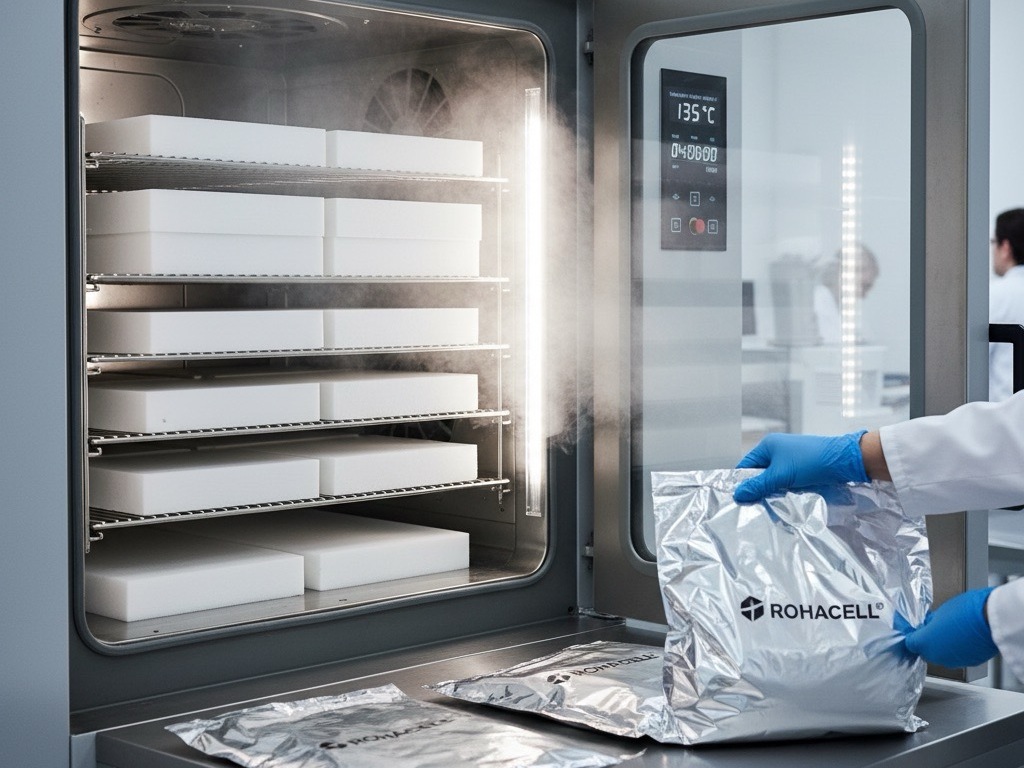
Drying is best carried out in circulating-air flow ovens. The recommended drying parameters involve heating the foam sheets at a minimum of 135°C for at least 4 hours using a heating cabinet with proper air circulation.
The duration of heating depends on the thickness of the sheets—thicker materials require proportionally longer drying times to ensure moisture is removed throughout the entire cross-section of the foam.
Post-Drying Handling
Directly after drying, the sheets must be protected from atmospheric moisture by storing them in diffusion-proof aluminum bags. This protection is essential because ROHACELL® can re-absorb moisture from the surrounding environment.
After removal of the sheets from these protective bags, the time available for processing (known as “out-time”) is limited. However, this time window is cumulative, provided that the material is returned to the bags when not in use. This flexibility allows for practical workshop handling while maintaining material quality.
If the allowed processing time of the sheets is exceeded, the drying process can be repeated to restore optimal material condition.
Why Proper Drying Matters
Moisture within the foam structure can negatively impact processing outcomes and final part quality. Proper drying ensures consistent mechanical properties, optimal resin bonding, and reliable dimensional stability throughout the manufacturing process.
Technical Support from CHEM-CRAFT
CHEM-CRAFT’s team of composite engineers can provide detailed guidance on drying parameters specific to your ROHACELL® grade and processing requirements. As experts in composite processing methods including RTM, infusion, and autoclave techniques, we ensure you achieve the best results with your foam core materials.
Contact us for technical specifications and personalized recommendations.