Versatile Adhesive Compatibility for Sandwich Construction
ROHACELL® PMI foam cores offer exceptional versatility when it comes to bonding, thanks to their solvent resistance and high heat distortion resistance. These properties mean that practically all commercial adhesives can be used, giving manufacturers flexibility in selecting the optimal bonding system for their specific application.
Surface Preparation
Before bonding, ROHACELL® surfaces must be freed from dust by vacuum suction or by blowing with oil-free compressed air. This simple preparation step is essential for achieving reliable bond strength.
For applications requiring maximum bond strength, treating the foam surface with a needle roller before adhesive application significantly improves adhesion by creating mechanical interlocking points for the adhesive.
Adhesive Categories
Adhesives suitable for ROHACELL® fall into three main categories.
Solvent-based adhesives and emulsion adhesives (typically rubber-based) produce joints that remain somewhat elastic with good peel-off strength. When using these systems with ROHACELL®, both surfaces should be coated and allowed to dry thoroughly before joining under pressure, as the foam is impervious to solvent diffusion. Bond quality can be improved through heat-sealing at 80-120°C under pressure up to 40% of the foam’s maximum compressive strength.
Solventless adhesive systems include hot-melt adhesives, epoxy resins, polyester resins, and methacrylic resins. Two-component adhesives should cure under sufficient pressure (0.05-0.3 N/mm²) or be fluid enough during application to fill the cut cells adequately. Curing can be accelerated with heat up to 160°C. These joints become very hard and rigid.
Adhesive Films
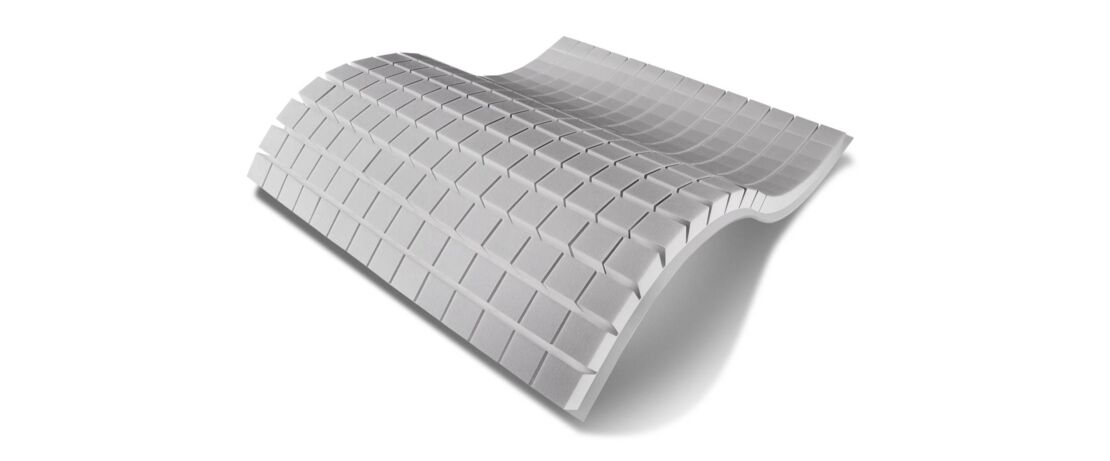
Adhesive films require sufficient thickness (100-200 g/m²) to anchor firmly in the cut ROHACELL® cells. When using hot-melt films, perforating them before bonding helps avoid air bubbles. For difficult cases, prior grooving of the foam surface (approximately 1-1.5 mm deep and 2 mm wide) aids deaeration.
Two-component adhesive films that release volatile constituents during cure should be warmed through with gentle pressure, with the press briefly bumped to allow volatiles to escape before final bonding.
Material-Specific Recommendations
When bonding ROHACELL® to other materials, adhesive selection follows the requirements of those materials. Epoxy resins, rubber adhesives, or polyurethane adhesives work well for metals and laminated plastics. Methacrylic resins suit acrylic glass applications. Polyester resins, epoxy resins, and polyurethane systems are appropriate for wood, paper, and glass fiber reinforced polyester sheets.
Achieving Flat Sandwich Panels
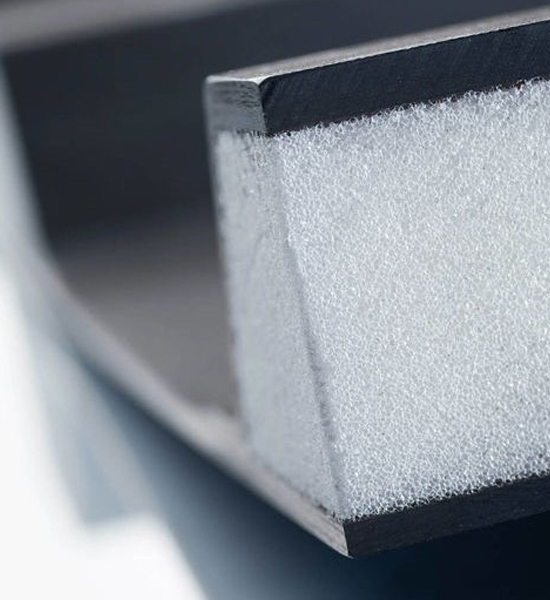
For perfectly straight sandwich sheets, both sides of the ROHACELL® core should be bonded to skin materials simultaneously. Both skins must be identical in material and thickness, with uniform heating and cooling on both sides throughout the process.
Using slightly oversized ROHACELL® sheets (0.5-1 mm) and running the press to firm stop prevents overstressing the foam at high curing temperatures.
Expert Guidance from CHEM-CRAFT
CHEM-CRAFT’s composite engineering team can advise on optimal bonding systems for your specific application. Contact us for technical recommendations.