Materials science rarely stands still, and structural foam technology is no exception. The ROHACELL® product family that aerospace engineers specified twenty years ago has evolved substantially, with new grades addressing emerging applications and manufacturing processes. Understanding where this technology is heading helps engineers and designers anticipate capabilities that will shape tomorrow’s products.

Evolution of Processing Capabilities

Early PMI foams were developed primarily for autoclave processing, where temperature and pressure requirements could be carefully controlled. This heritage remains evident in grades like ROHACELL® XT, which tolerates the most demanding autoclave conditions—temperatures up to 180°C at pressures of 0.45 MPa, or even higher after heat treatment. These extreme capabilities remain essential for certain aerospace applications where prepreg materials require aggressive cure cycles.

However, the broader composites industry has moved steadily toward out-of-autoclave processing. Vacuum infusion and resin transfer molding offer lower capital costs and the ability to produce larger structures than autoclave-sized ovens can accommodate. Newer foam grades have been optimized specifically for these processes, emphasizing low resin uptake and dimensional stability under vacuum rather than pressure resistance.

The RIMA grade exemplifies this evolution. Its cell structure was specifically engineered to minimize resin absorption—approximately 50 g/m² in typical infusion processes. This performance level was previously unattainable with PMI foams and opens applications where resin weight had been a limiting factor. The fine-celled material performs exceptionally in infusion-based aerospace and automotive components, as well as in sporting goods where every gram matters.

High-Volume Production Focus

Traditional PMI foam production involved batch processes suited to lower-volume, higher-value applications. The aerospace industry accepted this model because component volumes are relatively small and performance requirements justify premium pricing. Automotive and other high-volume sectors require different economics.

ROHACRYL® represents a significant step toward addressing volume production requirements. This newer acrylic chemistry enables thermal processing up to 120°C—sufficient for many automotive cure cycles—while delivering mechanical properties competitive with traditional PMI grades. The shear modulus reaches 47 MPa, enabling structural applications that previously required heavier alternatives.

Key advantages for high-volume applications include:

  • Very low resin uptake (around 250 g/m²) reducing material costs per part
  • Thermal stability enabling faster cure cycles and higher production rates
  • Recyclability addressing end-of-life concerns for automotive manufacturers

The recyclability aspect deserves particular attention. Automotive OEMs face increasing pressure from regulations requiring recycled content and end-of-life recovery. A structural foam that can be recovered and reprocessed fits this regulatory trajectory better than alternatives that must be landfilled or incinerated.

Tailored Cell Structures

Cell size and structure influence numerous foam properties. Coarser cell structures generally offer better mechanical properties for a given density, while finer cells minimize resin uptake and improve surface finish of the finished composite. Traditional PMI foams presented engineers with a limited range of cell structures optimized for general-purpose use.

Modern grades offer cell structures tailored to specific processing methods and applications. The HF grade, for instance, features an extremely fine cell structure that ensures minimal resin uptake while providing excellent performance in antenna and radome applications. This fine structure also benefits medical imaging applications where consistent material density affects image quality.

Manufacturing advances enable this tailoring. Foam production processes can now be controlled more precisely, allowing cell size distributions to be optimized for particular end uses rather than accepting whatever the basic chemistry produces. This capability should continue expanding as production technology evolves.

Temperature Performance Boundaries

Application engineers constantly push for higher temperature capabilities. Aerospace applications increasingly specify prepreg systems that cure at temperatures above 180°C, while emerging applications in hypersonic vehicles and space systems operate in thermal environments that previous-generation foams cannot tolerate.

Current temperature capabilities span a wide range:

  • Standard grades handle processing temperatures to 130°C at moderate pressures
  • XT grades withstand 180°C processing and can reach 240°C in pressureless post-cure
  • Heat-treated variants like XT-HT operate at 190°C under pressure

Research efforts continue pushing these boundaries. The chemistry of polymethacrylimide offers inherent thermal stability that provides headroom for further development. Applications like BMI (bismaleimide) composite systems already leverage this capability, and future high-temperature resin systems will likely drive continued improvement.

Integration with Advanced Manufacturing

Additive manufacturing and automated fiber placement are reshaping how composite structures are built. These processes impose different requirements on core materials than traditional hand layup or automated tape laying. Foam cores must be compatible with robotic handling, amenable to in-situ joining, and tolerant of the thermal cycles that additive processes sometimes generate.

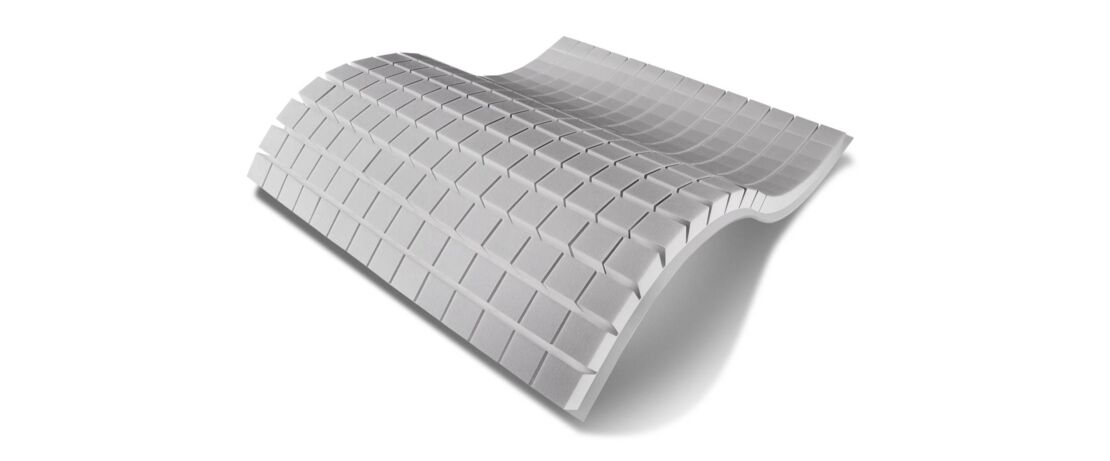
The thermoformability of PMI foams provides advantages in automated production environments. Complex core shapes can be formed without machining, reducing material waste and enabling geometries that would be difficult to achieve through subtractive processes. CNC machining remains important for precision features, but forming handles much of the gross shaping work more efficiently.

Digital design tools increasingly optimize core placement and thickness distribution within structures. Variable-density cores—thicker or denser where loads concentrate, thinner where they don’t—reduce weight beyond what uniform cores achieve. Manufacturing these optimized designs requires materials that can be readily shaped and joined, playing to PMI foam strengths.

Artificial intelligence is now entering the PMI manufacturing process itself. CHEM-CRAFT has filed a patent application (P.453046, August 2025) for an automated PMI plate production system that leverages AI for real-time optimization and production forecasting. This development signals a shift from AI being merely a design tool to becoming integral to how advanced foam cores are actually manufactured—potentially enabling tighter tolerances, reduced waste, and more responsive production scheduling. As the industry moves toward Industry 4.0 integration, such innovations will likely accelerate the adoption of PMI foams in applications where consistent quality and supply chain reliability are paramount.

Sustainability Considerations

The composites industry faces increasing scrutiny regarding environmental impact. While lightweight materials reduce energy consumption during the use phase of products like vehicles and aircraft, the production and end-of-life phases also matter. Foam manufacturers have responded by addressing both aspects of the lifecycle.

Production process improvements have reduced waste and energy consumption over time. The newest facilities incorporate closed-loop systems that capture and reuse process materials rather than releasing them as waste. These improvements address the upstream environmental footprint without compromising product performance.

End-of-life solutions have advanced significantly with recyclable foam formulations. While not all grades can be recycled—some high-performance variants involve crosslinked chemistry that resists reprocessing—newer materials like ROHACRYL® were designed with recyclability as a core requirement. This design-for-recycling approach will likely influence future development priorities.

Market and Application Expansion

New applications continue emerging as engineers discover where PMI foam properties create value. Urban air mobility vehicles—electric vertical takeoff and landing aircraft designed for urban transportation—represent a particularly promising growth area. These vehicles prioritize weight reduction even more aggressively than conventional aircraft, as battery energy density limits range and payload.

Other emerging applications worth watching:

  • Autonomous delivery systems requiring lightweight, durable structures
  • Space launch vehicles seeking to reduce mass for improved payload fractions
  • Advanced prosthetics where patient comfort demands minimum weight

These diverse applications share common threads: they require materials that deliver exceptional performance at minimum weight, they can justify premium material costs through operational benefits, and they demand reliability that commodity materials cannot guarantee. PMI foam technology is well-positioned to serve these needs as they scale from prototype to production.

The Role of Technical Partners

Navigating material selection amid this expanding landscape of grades and applications requires expertise. Engineers developing new products benefit from working with distributors who understand both the materials and the manufacturing processes involved. Technical support that extends beyond simple order fulfillment accelerates development and reduces risk.

Companies specializing in high-performance foam distribution—like CHEM-CRAFT serving Nordic Europe, Eastern Europe, and BeNeLux countries—bring composite engineering expertise alongside product knowledge. Their familiarity with processes from hand layup through autoclave enables recommendations tailored to specific manufacturing environments rather than generic specifications.

The future of lightweight materials extends beyond any single product family, but ROHACELL® and its variants will certainly play a significant role. The foundation of PMI chemistry continues yielding innovations that address emerging requirements while building on decades of proven performance. For engineers designing the next generation of aircraft, vehicles, and equipment, these materials offer capabilities that expand what’s possible.